Efficiency can be bad for your health

In a world of “Bean counters”, the bottom line and increased production, we seem to have missed the human side of the equation and it is having a detrimental effect upon all of us personally.

Terms like work-life balance, transparency and a hundred other touchy feely buzz words seem to only appease the many; with a sense that “something is being done or there is a process to follow”. The problem lies in the truth that as a business the chosen target of focus is the wrong one. We focus to attain and maintain 10% growth, we focus upon man hours wasted, increasing production and reducing staff, all valid strategies yet only one side of the complex equation that is work and business. The other side of the coin is far more complex and counter intuitive.

The ancient Romans were presented with a steam engine by Heron, a Greek mathematician and engineer in the 1st century, yes a basic, rudimentary steam engine (the aeolipile ) it could have been used to do work and may have eventually lead to the industrial revolution occurring back in ancient Rome. The surprising thing is, when this device was shown to the Romans they basically replied “What would we do with all the slaves?” How many among us would have thought to say that, does this mean they were smarter than us or is it that they had a different focus and vision of what work was actually about. Yes they had slaves but they also were aware that if a machine could do all the work then the social impact would be far greater than they were prepared to suffer.
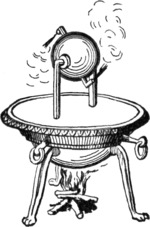
steam engineMechanisation and the industrial revolution did occur and its social impact has been felt ever since but does that mean in a modern work place the workers are machines, cogs in the greater mechanism? Is production the means and the end of the modern global workforce? Strangely enough I have never heard anyone say they work solely to produce; reproduce maybe, family, friends or the next holiday, but never just to produce product or perform a service as the ultimate goal of their labours. The goal for most people is not what they actually produce but what they think it will give them, a means to an end. So to most of us work is not the destination but the method or journey to achieve something greater.

With that in mind, think about the way we examine a business and work-flow. The focus is on efficiency, increased profit and reduced cost, all easily measured metrics and relatively easy to modify, especially in a negative way. Now look at the goal of the “workers” the human side of the equation (yes, this includes Management), a much harder metric to examine let alone measure. This is a can of worms! And far to complex to broach here. Yet we can determine some threads to be taken home from this:

Obviously the goal of the “workers” is not actually tightly related to the method or journey taken.

The way we measure success is narrow by nature, focusing upon components not the whole.

So what am I getting at ? The question we often ask is wrong, not because we don’t know it’s wrong but because that’s how we’ve always worked. More is better but more of the wrong thing is worse.

Focus and goals are highly relevant and to lose sight of them is a dangerous and unhealthy way to go. Consider a holiday, a trip across Europe say, most of us plan this sort of thing, where to go, what to see, what to do, and so on. Now what is the goal of a holiday, this varies but for most of us it’s to relax and take a break from work etc. So if your goal is to relax and take it easy then would you plan every moment of the trip; bus and train timetables optimised, condense the trip to its minimum? No, of course not, but if your goal was to see as much of Europe in the time you had, the answer would be Yes. That’s a sight-seeing trip not a holiday, yes they can blend together to some degree but the goals are different.

So how would we measure this, number of sites seen, number of photos taken, time taken, cost effectiveness, distance travelled, personal interactions engaged in or do you need a holiday when you return? It would depend on your attitude to travel and your actual goal.

Efficiency may be bad for your health if you focus on the wrong things or ignore your goals. Like a laser, a highly focused beam of light, efficiency can cause damage if poorly applied.

So how do we deal with this idea and try to make sense of it. Personally I see work, business and global markets no differently than ecosystems, highly varied and complex but with many smaller “components” which effect the overall health of the system.

Biology is a complex and varied system far more so than business, despite what some economist types would have you believe. Think about it biology has evolved over millions of years, has had dead ends, set backs and eventually become what we see today. Business and economics has had at best several thousands of years and if we remove bartering far less.

So if the more evolved and complex system has particular traits then we should at least examine the more simplistic system to see if it truly requires the same traits. Yes we should pare it back to its simplest form, and see the basic blue print of an advanced system. Wow! heavy stuff and far more complicated a discussion than for this document but basics can be gleaned.

Any biological system has some basic truths our comparisons will depend upon how we see a company or business. If we see a company or business as an individual entity then we would focus on the biological requirements for a single individual of a species. If we see the company or business as a group dynamic then we could focus upon cells in individuals or social behaviour, animal dynamics in a group of individuals or maybe even social insects such as bees, ants etc.

An Ecological Example: Trophic cascade.

When a top predator is removed from an ecosystem, a series of knock-on effects are felt throughout all the levels in a food web, as each level is regulated by the one above it. This is known as a trophic cascade. The results of these trophic cascades can lead to an ecosystem being completely transformed, and some surprising results. The impacts trickle down through each level, upsetting the ecological balance by altering numbers of different animal species, until the effects are finally felt by the vegetation.

Removal of apex predators, such as sharks, from food chains can have a devastating effect on the ecosystem. Many sharks reproduce slowly, attaining sexual maturity at a later age, this means their removal has a long term effect to their ecosystem. The next level of carnivorous fish are now not preyed upon and can increase in numbers. This increase can lead to the removal of herbivorous fish which graze upon the algae. If the numbers of these grazing fish is reduced drastically the algae can grow unhindered. This type of trophic cascade can destroy coral reefs by choking out corals that can’t compete with the fast growing vegetation. Not really an obvious outcome, is it?

So when we optimise or increase the efficiency of any part the trophic cascade effects can result into surprising outcomes some of them detrimental.

Aquariums a simplified system as an example.

Most of the technology used to keep a modern aquarium healthy has directly or indirectly evolved from the sewage treatment industry. Many aquarists find this surprising but the legacy of waste treatment is undeniable especially when we look at marine aquaria. The marine aquarium is the pinnacle of aquaculture for the home hobbyist, loaded with advanced equipment such as, biological filter media, Protein skimmer (foam fractionation), denitrifying beds, probes for pH, ORP (oxygen redox potential) etc., ozone generators the list is extensive and goes through even to the low tech box filters and under-gravel filters used in a basic bowl or tank for goldfish and other freshwater fish etc.

Why are we talking about fish? Well the point is that all this technology originated from sewage treatment and is now used to keep your fish alive yet it was developed with a different goal. The best example of this is the protein skimmer or foam fractionator, this device forces a stream of small air bubbles into a water column and if the pH (is say that of seawater ) is sufficiently high a foam begins to form, floating up and then collected and removed, extracting proteins (organics) from the water column. This basic tool is invaluable to the marine aquarist wishing to keep corals alive and healthy in their marine aquarium. Marine invertebrates, especially tropical and reef invertebrates are highly sensitive to pollution and increased organics because they have evolved in nutrient poor waters.

The removal of organics before they can pollute the water column is highly beneficial as you would imagine. The first protein skimmers were an air driven affair using special wooden air-stones, that would slowly degrade and become less efficient overtime. The advances in protein skimmer design meant that air driven skimmers were replaced by highly efficient venturi and/or “turbo” skimmers. Now herein lies the problem, as skimmers became increasingly efficient at removing dissolved organics from the water column, there was a growing need to add supplements to your aquaria to maintain healthy growth. Corals and some other invertebrates require dissolved nutrients, organics and minerals to maintain a healthy metabolism. Highly efficient protein skimmers were in fact being run continually by most aquarists and ironically they were also adding expensive supplements while the skimmers were on and therefore extracting them at the same time. My advice was, since the ridiculously efficient skimmer was being used, they should only run them intermittently either on during the day and off during the night or 2 days on, 3 days off or variations of these depending upon feeding schedules, stocking levels and inhabitants.

The fact that was lost, was that the goal of sewage treatment is ultimately pure water; the goal of an aquarium on the other hand is an aquatic ecosystem which is anything but pure. Actually pure water or distilled water will kill your fish very quickly indeed. When transplanting technology from sewage treatment to aquaria, the goals of the two disciplines were similar but not identical.

Be careful and aware of your intent or goal and the intent or goals of the “tools” and methods you utilise.
Wikipedia, History of the steam engine

The cascade effect

Efficiency and Behaviour in Different Contexts

I like efficiency – when I walk into a shop, I want the sales person to help me find what I’m after and process the sale in a business-like manner. I also like to be treated as a person.

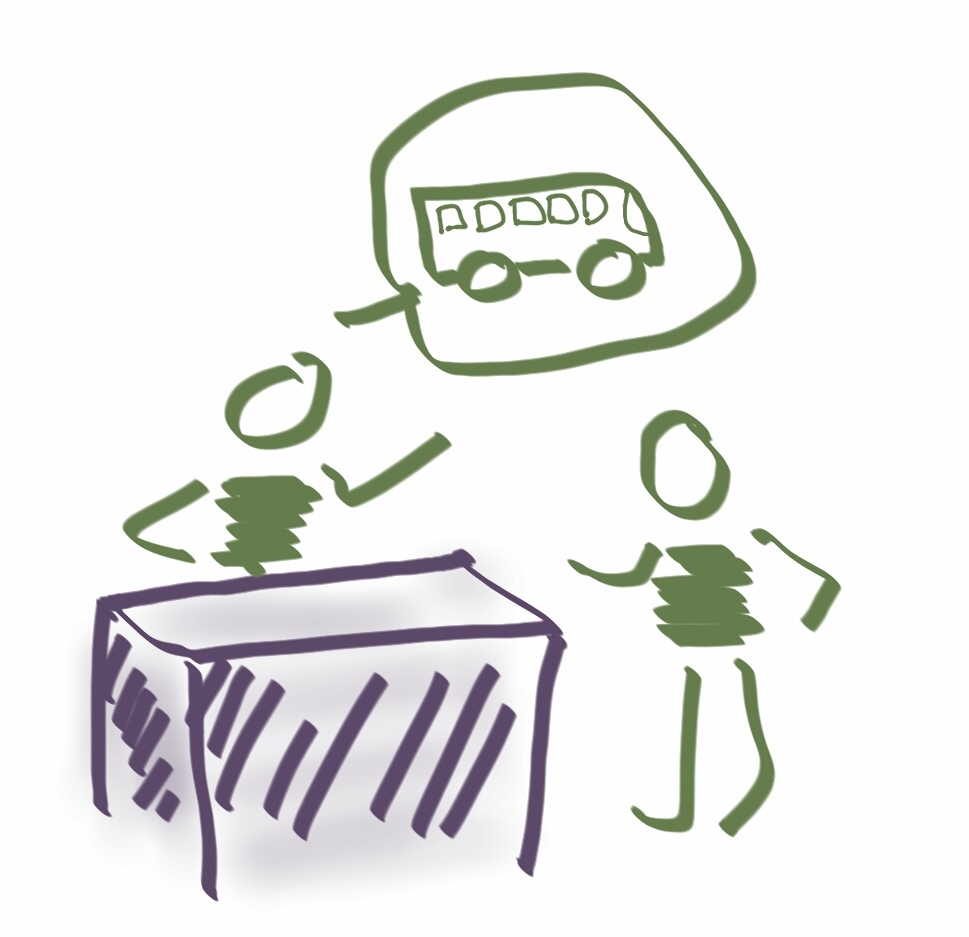
The other day, I was getting an ID card and the person serving me took a little extra time to find out about my transport means to the site. She then let me know about an extra public transport service that I wasn’t aware about. This is now saving me 10 minutes travel time each way which is 20 minutes per day. So a little less efficiency in one transaction has resulted in ongoing efficiency for me on a weekly basis.

ID sketchWhen is efficiency good and when is it bad? It’s related to the type of system we are in.

In the obvious domain on the Cynefin framework, we can attain best practice – repeatable processes. Here we can see the cause and effect relationships, observe bottlenecks and optimise the process to make it more efficient fairly easily.

In the complex domain, efficiency is not easy – or is about something very different. Using my ID example, by having a little chit chat with me, the service centre person was able to identify an extra need that I had and supply me with valuable information. The efficiency in that exchange was the use of ‘anticipatory awareness’ – being sensitive to the hints in conversation that could express a need. Great sales and service people are very good at this – if we asked them to document the process they use, it would not be easy. It would not be a step-by-step ‘recipe’ – instead it might be something like a multi-branching if/then/maybe flow chart thing. I’m certain that it would be adapted or added to after almost every interaction.

Another example of efficiency being bad is in farming, Imagine that we created plants that could extract all of the nutrients they needed from the soil and grow until the nutrients in that place were all taken up. This would be a disaster – we could only grow one crop in that space and it would desperately need all sorts of composts and fertilisers before it was useful again. If it can be that bad in a farming sense, perhaps we do not want all of our best practice processes to become super-efficient – it could deplete supplies in ways that we cannot anticipate.

In summary, efficiency can be good when we have processes that sit firmly in the obvious domain and can achieve standardisation and best practice (except if the efficiency leads to resource depletion). In these cases we can save time, money and effort by becoming more efficient. Efficiency can lead to poor outcomes if we try to apply it in the same way to the complex domain – this can waste time money and effort in the pursuit of gains that are not possible. Instead, here we want to sharpen our awareness and improve our methods of detecting small signals.

Natural Flow

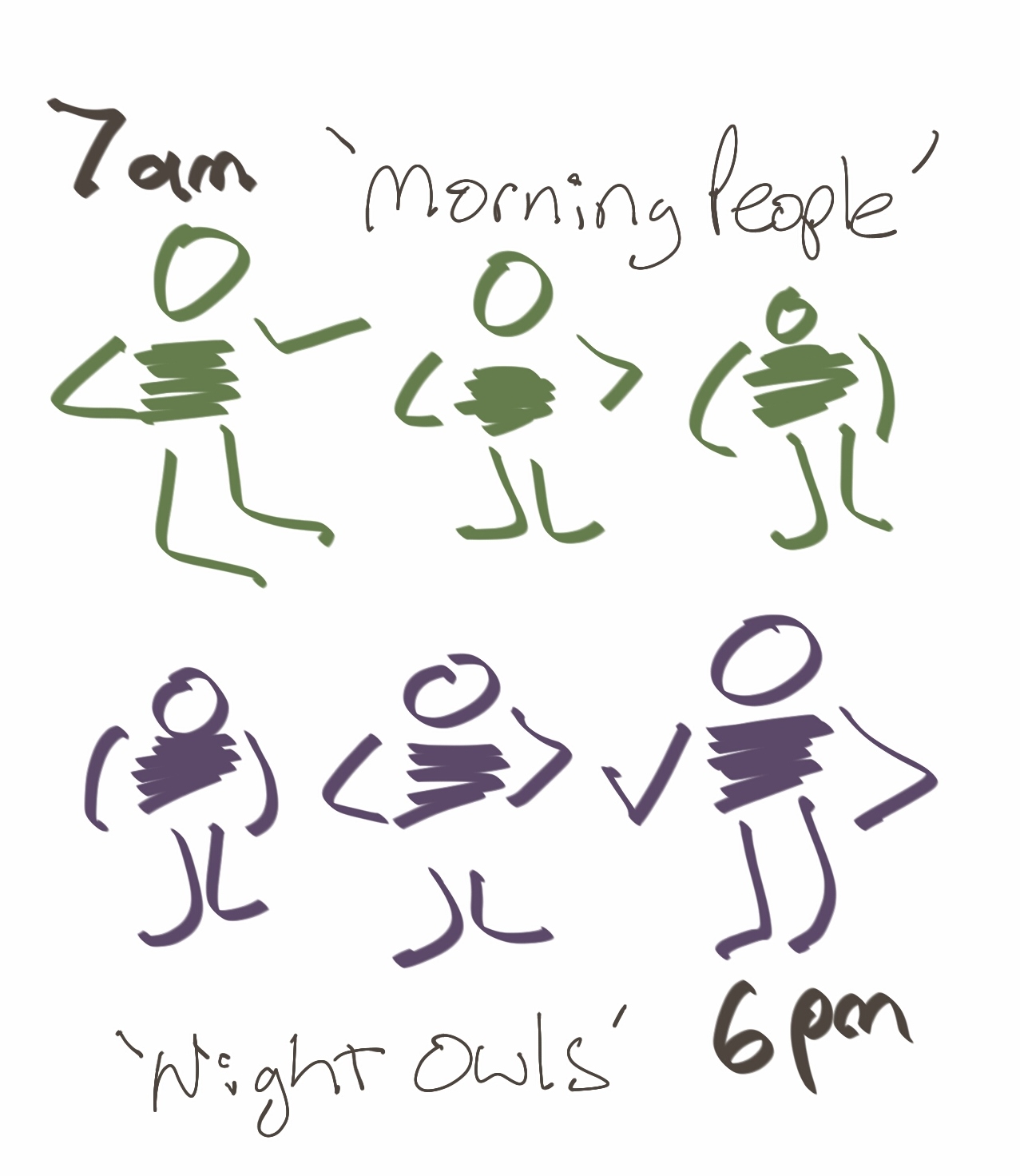
I’m a morning person – I like to get my chores out of the way first so that I have more options later in the day. There are others who are night owls, their flow is to stay up later and get things done and then sleep in a little later the next day. These patterns are an example of our natural flow.

Natural Flow SketchFor example, I am writing this post on a Sunday morning because it is the first time this week that I have had the energy and time to do it (after work during the week is harder for me).

How does this impact us at work? When working with other people, how often do we stop to ask them about their preferred ways of working. It might be terrible of me to schedule a 7:30am meeting with someone who was a night-owl – but highly effective if that other person was like me and was able to start early. On the other side, how often would we speak up and say that we don’t do our best focused work after 5pm?

We have natural flows and rhythms of working in many other ways

  • Our conversation habits – the gaps we leave between when we start speaking and others have finished (these are also influenced by our geographic culture)

  • The ways that we perform repeatable tasks (such as filling in time sheets, drafting emails, transport between and to/from offices)

  • Ceremonies such as how we start meetings, where we sit/stand how we make tea or coffee

  • Engagement flows – how we greet people and get started with conversations and work items

We are subconsciously observing a lot of these flows whenever we interact with others, but there is a risk that we are misinterpreting our observations. I have also not given my own natural flows much thought aside from the morning person observation already mentioned. I am about to start working on a few small projects with some colleagues and will try having a conversation about preferred working styles in the next month – a good future topic for this blog.

“Biological flow” and the implications upon work-flow and enjoyment.

The concept of biorhythms is an ancient one founded upon the observations of the seasons, tides and even life itself. The validity of biorhythms is debatable, yet we all have fun reading our horoscopes which are based upon astrology and biorhythms.

The word biorhythm is a composite of the two Greek words, bios and rhythmos, which mean life and a constant or periodic beat. The theory of biorhythms defines and measures three basic and important life cycles in humans: the physical, emotional, and intellectual.

The key thing here I wish to expand upon is the idea of cycles and rhythms. The idea that we all have a natural rhythm and cycle is the basis of the idea of biological flow.

Biological flow is defined here as the natural flow that exists in every individual. The basic premise of biological flow can be seen in the length of your stride when walking or running, this is the result of many factors unique to you and as such is natural to you. Now consider you have to walk using a taller persons stride. The distance covered by each stride would be larger and feel awkward to you, so much so, you may actually stumble and fall. The basic fact is that the longer stride of a tall person is not suited to your biological parameters such as length of leg, muscle mass etc. Now the same would be true if a tall person was forced to walk or run using the stride length of a shorter person, the end result would be unease and a lack of comfort and even failure such as stumbling or falling. This is easily observed when a child is trying to match the stride of their parent, they often loose step and run to catch up.

Now I propose that we all have a natural metre and rhythm when performing any task. When singing, the number of words a vocalist can sing is determined by factors such as lung capacity, the way they usually phrase their words when speaking, if they are a smoker etc. Now most of us have tried to sing along and at some time have just run out of breath in the process. This is partly due to technique, not taking a big enough breath at the right time but it is also due to our natural and unique biological flow, shaped by our lung capacity, phrasing etc.

The concept of biological flow owes its framework to musical theory in particular musical metre and musical rhythm.

When we look at musical theory, musical metre and musical rhythm often become confused and meld into one. The actual fact is that music is all about beats, timing and sound patterns. A metre is a regular pattern of beats indicated by a time signature. A rhythm is the way different lengths of sound are combined to produce patterns in time.

The following terms are used to describe and preform music :

  • pulse

  • simple and compound time

  • regular, irregular and free rhythms

  • augmentation, diminution, hemiola, cross-rhythm

  • dotted rhythms, triplets, syncopation

  • tempo, rubato

  • polyrhythm, bi-rhythm

  • drum fill

The field of musical theory is vast and out of scope for this discussion, yet the same idea for biological metre and biological rhythm can be observed. We all have a natural and unique biological metre, the speed at which we walk, run, perform tasks etc.; we also have a tendency to have a set pattern of doing things, the rhythm to which we tend to perform tasks for example. There is even a set metre, the time signature per se, of when we naturally perform these patterns of work and life. Some of us work at a steady pace, others are more like sprinters, while others still are marathon runners and on top of this there is the metre of when our energies are expelled. The same could be said for the way we go about performing our daily tasks and even lives. This methodology or rhythm that we gravitate to, often is the reason why we find some people hard to work with and others easier to collaborate with. There is no one answer because we all process and respond differently to the stimuli of work and life but what is clear upon reflection is that the way we are wired definitely impacts our work-flow and enjoyment of work/life.

Our natural biological flow when performing tasks is also affected by where we are in the day; Are you a morning person or a night owl?

Do you need a coffee in the morning before you start?

Do you become so absorbed and consumed by a task you loose track of time?

Do you like to jump in and try things?

Do you like to have tasks defined and quantified?

Are the others you work with wired similarly?

So next time you’re working with others try to keep biological flows in mind, and accept the fact that these different work flows require awareness, understanding and communication and only then will we feel and attain collaboration rather than WORK.

The nirvana of collaboration can be obtained from the oppression of work when aware of the biological flows involved.

Misconceptions are harder to correct than lies.

We all do it, take things out of context, only read the summary, sound bites, hearsay and even don’t listen carefully or fully enough to truly understand. These lapses of focus and concentration can sometimes lead to misconceptions about certain things in our lives. These misconceptions are often not noticed because we actually don’t realise they are misconceptions until we expend some effort in discovering them and correcting them. Misconceptions are like cracks and in the foundations they can range in size from minor hair cracks to major structural fissures. It is only when we begin to build upon them that we start to notice things aren’t quite correct or aren’t quite how they should be.

Like the denial of an alcoholic we often fail to recognise the misconceptions we carry and blindly follow and heaven help anyone who tries to correct them, for us. The simple fact is, that lies on the other hand are far easier to identify and therefore correct. Think about it lies or false concepts often hit a brick wall of reality where things don’t add up. At this point there are usually glaring and obvious inconsistencies, so we begin to dig deeper. Once we begin to examine the facts and look carefully at the lies or false conceptions, we are actually prompted into awareness of their existence. To a vigilant mind, lies and false conceptions are like acids corroding the understanding of the world; while misconceptions are like caustics, slowly undermining it. Acids burn when it touches our skin so we become painfully aware of it quickly and address it by washing it off, to correct the situation. Caustics also causes damage yet we do not feel it burning our skin so a caustic solution can continue to burn you without you every knowing its present.

Misconceptions are more subtle than lies, yet they skew or pervert our perceptions of the situation in much the same way. Misconceptions behave in a caustic way because we don’t realise they are misconceptions at the time. If someone told you today was Monday, when you knew it was actually Tuesday, you’d know it was an untruth or a lie; yet if you woke up thinking it was Monday, you could actually plod threw the whole day and never realise your mistake. You may even argue that the day was in fact Monday, with some vigour. In this situation your misconception would only come to light if you needed to work with a date oriented task.

Misconceptions like misunderstood lyrics can be rather difficult to shift and can actually lead to differing outcomes.

So how can we stop them? Well we can’t actually stop them, the best we can do is reduce the opportunity for them to exist.

Some thoughts on how to reduce the misconceptions:

1) Definitions are the foundations of communication, therefore when using jargon or sound bites paint the frame work of their meanings, in your context. It wouldn’t be the first time people glaze over the meaning of a word because of embarrassment.

2) When ever you use information from another field or discipline be aware that your audience my not be cross the subtleties of that area or field. Again context or the lack of a common context may allow misconceptions.

3) The opportunity for miscomprehension lies in life experience of your audience, the more homogenous the crowd the more specific, focused and jargon biased you can be. The trade off for easy of “communication” is an increase in potential misconceptions.

As a member of any community if you truly wish to discuss, debate and explore possibilities you must define, scope and frame the context of the discussion point. Only when we’re on a firm footing of known concepts and defined language can we have the freedom to truly communicate and explore ideas. Most people find the grunt work of defining and framing boring but without shared concepts, language and communication fails and falls into disagreement and argument.

Have you ever debated/argued with someone only to find the disagreement was solely based upon a subtle difference in the definition of a word. Words are not just words they carry with them subtile overtones of meaning which vary for each of us depending upon when, how, where we heard them and what they meant to us.

I hope these thoughts about misconceptions may aid in avoiding them.

When is help not helping?

An interesting experience at the local fried chicken store. Last time I went to my local fried chicken store I was struck by the total lack of awareness by the staff. The simple process of taking orders, preparing food, bagging and final delivery was completely off the rails. The bizarre thing was that it had gone off the rails mostly because of one “helpful” person. To summarise the situation I’m at the counter to order and ended up waiting more than 10 minutes for a staff member to take my order. The store was not overly busy only a few customers. So why the long wait before taking my order? The staff member in question had left his post “the register” to aid another front of house staff member in bagging orders. Nice of him but in more than 10 minutes he never kept an eye on the counter for new customers and no other staff member bothered to notice. I personally would have walked out 3 times over but my son wanted Fried chicken so we stayed. While waiting and watching the process the staff were engaged in I noticed they were waiting upon menu items which were not ready yet. The back of house staff never glanced at the counter, the front of house staff had their backs to the register meanwhile the customer waited. Eventually the male staff member came to the register and took another customers order who had been standing there waiting. I actually thought she had already ordered but she hadn’t. Upon taking her order he proceeded to go off to the bagging area to help his fellow female counter part.

Now all this time I was wondering if the two young people had been trained in front of house customer service. The basics of any food outlet the way I see it is get the order as soon as possible, once you have their order they are hooked and wait. One of the metrics most organisations use for customer relations is the wait time, answer the phone call in 3 – 8 rings etc. Back to the “process” I use the term loosely; while the staff were waiting on the menu items, no orders were taken therefore the cooking team could not prepare the food in the meantime for the other customers. The kitchen staff never glanced at the counter to gauge the up coming work load, the management never appeared from the back of the store/kitchen. This was not rush hour (5 people in the store) but the entire team at the local fried chicken store had bottle necked.

The counter staff handed the food to the previous customers apologising for the delay. I was thinking ‘if you take the orders while waiting for the not prepared menu items, the wait would not be so great’. The order taking process is the most crucial and shortest compared to those following.

Several minutes passed and then the female staff member came to take my order. Meanwhile two other customers entered and the older man walked start up to order in front of me. Realising the error, the female staff member asked me for my order. When she asked me if she could take my order, I smiled and enquired in a gentle polite manner if she had been trained in customer relations. The intent of the question was not to offend but to genuinely discover if the chicken store or the management team had trained her and her male counter part for front of house. My question was ignored, so I added “you have to keep an eye on the register when your at front of house”, to make her aware that it is important. At this point the pushy older male customer became animated accusing me of being abusive to her and that she did not have to put up with that etc. All the while he was backing away from me towards the exit, a man of conviction. This is the classic guilt mixed with snap judgement scenario, the old man had pushed in and without knowing what had happened before, the lack of process, he assumed that my question was because she had gone to take his order before me. This type of person is no help and beyond help in fact I consider him a moron because only a moron would get involved wth little or no facts. However, guilt is a funny thing.

Now let me expand, I know I somehow intimidate people by my looks and my honesty but I am very aware of this and try to be super gentle when interacting with people. The female staff member did not appear upset but more surprised. In fact the old man caused more of a scene than anyone, ironic, guilt again. I then proceeded to give my order clearly and distinctly, “4 zee burger combos, regular and 1 pepsi max and 3 sunkist”, she read it back to me “a zee burger combo, 1 pepsi max and 3 sunkist”. I corrected her “No, 4 zee burger combos, regular and 1 pepsi max and 3 sunkist”, she read it back to me “3 zee burger combos, 1 pepsi max and 3 sunkist”. I corrected her again “No, 4 zee burger combos, regular and 1 pepsi max and 3 sunkist”. Finally on the third try she got it correct. Now she may have been flustered by my question or the old man but the question of front of house training seemed rather relevant at this stage.

Anyway the order was thrown together, dropped she asked me if I wanted the receipt, to which I replied “yes” and I left.

The receipt has a survey link on it for feed back, she didn’t inform me of this but I knew anyway. I took the food home and proceeded to fill in the online survey. Needless to say very dissatisfied appeared in more than one box. What was interesting was the question asking about cleanliness. I responded by checking the “neither satisfied nor dissatisfied” option, yet in the survey process I was later asked why I gave them a dissatisfied. Poor coding? The fried chicken store can’t listen? Who knows. I responded that I gave a neutral answer in the survey.

Why is your helping not helping? a funny story.

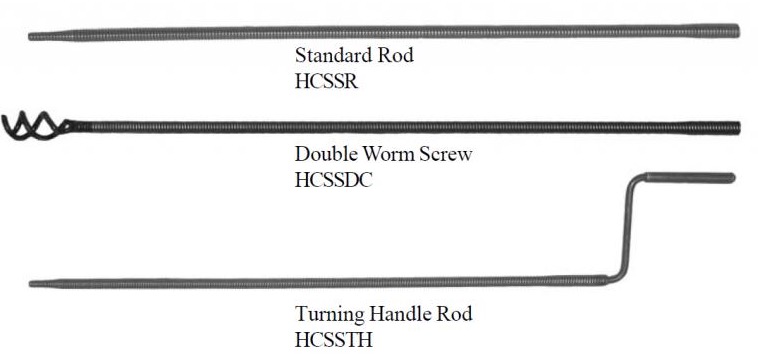
Now I’m a fixer, yes one of those genetically predisposed “idiots” that when I see a problem I feel a need to put it right. Therefore, when I saw a blocked drain I grabbed my set of plumbing springs

image

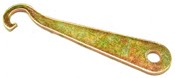
and began to clear the drain. Soil, roots the usual mess and eventually the drain was all clear. Now in the meantime my father was helping (yep you know where this is going). So while I was still working on the drain he decided to help by picking up all the soil I had pulled out and put to one side. My helpful father began to scrape up the debris and remove it. I had to move my stack of springs which were near me and the debris, to give him room to work. Now a set of old fashioned plumbing springs have a special tool called a separation key. This key is

image

designed to hook the end of the spring and pull it, enlarging the spring spiral while you twist it to separate the springs from each other. Now this little tool is a must because the springs become incredibly tightened during use and separating them without this tool is a nightmare. I noticed that my separation key was not near the unused springs. Yep he had somehow picked up a 100mm key and thrown it out, without noticing. Yes thrown it out, he had placed the debris into the garbage bin out on the curb for collection that very day. After some digging and head shaking I found the key and could now get back to cleaning the drain.

These two stories actually have a common thread of helping “going pear shaped” and becoming the opposite of helping.

Validations and Feedback

‘How am I doing so far?’

What a loaded question… When we ask a question like this, are we seeking feedback, or are we seeking validation? Perhaps this is related to the fixed versus growth mindset.

With a fixed mindset, I would be seeking support to validate that I have been doing a great job and that I am considered a superstar.
With a growth mindset, I am truly open to feedback and want to understand how I could improve.

Of course, this then leads us to metrics and the question about how they could be used for feedback and how they might be used for validation.

Rainfall as a metric means that each day we check our rain gauge in the garden and note how many millimetres of rain have fallen in the last 24 hours. This is not feedback – I am fairly certain that the weather systems do not use measurements from our rain gauges to find ways to improve the weather. Instead it is a monitoring metric and we can use it to validate that the mud was slippery outside because we had a lot of rain.

Budgets and tracking the spend against budget looks like a great feedback metric – however, by itself, it is purely for validation. How many of us have been rightly happy that a piece of work we just completed met budget expectations? (Or rightly unhappy if we did not meet the budget expectations?) Remember those feelings for a moment – pride, relief, happiness – or regret, sadness, blame – these are not very helpful if we want to improve how we work and can distract us from seeing other opportunities if we are not careful.

Feedback is when we ask why and how. Back to the budget example, if we ask why we did not meet budget, without blame, we can find out a lot of useful information and opportunities to improve for next time. One of my favourite lean tools is the ‘5 whys‘ – it is fascinating what can be uncovered if we keep asking why (with polite respect, of course). In the case of budgets – it is just as useful to ask why we met as why we did not meet budget – learning what worked well is very useful for next time also.

Validation versus feedback might be one of the root issues with KPI’s – when we are set a target number, it is very tempting to do all that we can to meet that number and then breathe a sigh of relief when we finally meet or exceed it. How many of us have had truly useful conversations about how we did our work, what we learnt and how we can continue to improve in the era of KPI’s? Validation is a very tempting focus and can feel a lot like feedback – but it is hollow praise.

Metrics validation and feedbackIn summary,

  • Validation is when we use metrics to show that we did a good job
  • Feedback is when we ask why or how we got a result

Be careful which outcome we are seeking when selecting and discussing metrics.

How do you judge your worth?

What makes you feel your work is appreciated?

What gives you satisfaction?

What gives you validation?………Metrics?

We all value our time yet we often feel that the real effort we put into something is not appreciated. A friend of mine once told me that “Nothing says thank you, like a pay check!” I laughed but on the whole he was right…. well basically. The actual feeling of worth is not really wrapped up in the amount of money we earn from our efforts. The sense of worth is far more intangible than that. What really makes me feel appreciated is not money but a sense that I have in some way imparted benefit, knowledge or ease. Don’t get me wrong if I’ve just worked an entire week only to get a thanks, I don’t feel appreciated or valued at all. I feel underwhelmed and will not help them ever again because obviously their life and efforts are far more valuable and precious than anyone else’s. Harsh? Not at all, only the way they value others time is.

“Cast not pearls before swine….” So why in all logic would you help/aid such a superior and perfect entity.

The basic fact is often a simple act such as a coffee or just company while I’m helping you out is enough. An experience being shared often eases the burden. This concept seems foreign to most but the simple truth is that as the helpee watches they also learn, maybe by simple osmosis, or by asking questions and even by active involvement.

What about the question of success? How do you gauge how successful you have been in a particular task?

The irony is that regardless of how many people in your lecture or class room, the true measure of success is the impact we have upon others. When a student finally gets it or understands the concept you have been trying to get across to them, then and only then do I feel satisfaction and validation. There are only a handful of people in our lives which impart such an impact upon us and these are the ones who are often not considered successful by the usual measure of things in our society. The quiet achievers and “teachers” who may themselves not know they have actually contributed more to others and as such have led a truly validated existence.

Metrics are often used to give validation or satisfaction yet the actual purpose of metrics is to gauge position. Position of a process. I propose that since satisfaction and validation are somewhat difficult to gauge and define, that we often substitute the more easily measured “metrics”. The ease of measurement does not make ease of satisfaction or validation.

Validation and satisfaction are destinations, metrics aid in keeping us on course and headed in the right direction. Metrics can be alluring and highly convincing but they fall short when we try to find satisfaction and validation. How could a static measurement give anyone a sense of worth?

Think about your own experiences. What gave you satisfaction and a sense of worth? What was the best work environment you ever worked in? Think about it the intangibles play a far greater part than the measurable or “metrics”.

Metrics are finite, cold, short lived and tools. Satisfaction is potentially infinite, long lived and a destination. Validation is warm, ever-lasting and a state of mind.

Initial expectations and pot plants

When you first interact with someone, your mind goes into high acquisitions mode. This is the initial response whenever we experience anything for the first time. Our mind is like a sponge absorbing vast amounts of details about the new experience. This is a good thing evolutionarily speaking because we have a rapid response to new stimuli and therefore a course of action can be evaluated quickly.

Yet this evolutionary advantage has a down side when dealing with others, in the long term.

We are curious animals and love to learn but we also love to experience new things. Now we all know that we all have at sometime switched off during a conversation, we go on auto pilot. This is not a bad thing per se but it does leave us open to the fact we are not driving the car so to speak, we are not actively engaged. This is the vacuum where assumptions and expectations rule and exert their influence, the world of lazy folly.

Consider the way we tend to accumulate information,

  1. Initial uptake, mind is like a sponge absorbing vast amounts of data
  2. Evaluation of new stimuli/experience
  3. Response plan
  4. Course of action

These steps happen subconsciously and often go unnoticed, yet they often become expectations and even assumptions.

So what about the pot plants?

Initial expectations and even assumptions for that matter, often go unnoticed just like the pot around that small plant you bought. You look after the plant, interacting with it on a daily basis, watering, rotating the pot so it grows straight etc. Yet after a few years the plant seems unhappy and stifled. No matter how much you water it, the leaves always seem to droop from lack of water.

How could this be?

The plant has grown enough to be root-bound. Unbeknownst to you and out of sight of all, the roots have wrapped around the pot, strangling the very plant they are meant to feed. Any green thumbed person will tell you, you should have re-potted long ago. In fact generally speaking you should re-pot every 2-3 years depending on plant vigour.

Back to initial expectations…...

Your parents still treat you like a kid, even though you have kid of your own.
Your siblings still treat you like their baby brother or sister.
Your friends from high school still see you as you were way back then.

These all sound familiar and are all based on the same idea of the root bound pot plant. The initial interactions laid the ground work for the initial expectations and assumptions. Just like the roots of a plant, things change even if you don’t see them. So over time your initial expectations of a person or situation, even if accurate at the time, will drift.

It is these subconscious initial expectations that remain static, just like the pot around our plant and just like the pot we rarely re-evaluate (re-pot) them. So maybe we should revisit our initial expectations and be aware of them.

Expectations

Imagine a discussion between managers.

Manager A – ‘How do think person X is performing?’

Manager B – ‘Doing a great job – understands what the need is and then delivers the outcome every time.’

Manager A – ‘Thanks – sounds good, I’ll count that as a ‘meets expectations’ in the review.’

Manager B – ‘Well, actually, I think that X exceeded my expectations – did you know that they have 5 years of delivery experience under their belt? I think that we are under-utilising X.’

Manager A – ‘Yeah – but they’re not really leadership material – I don’t think they will ever get above their current level in the company.’

Manager B – ‘That’s not their expectation – X has high potential, depth of experience and took this role to learn more about our part of the company. Have you had a discussion with X about their career goals and experience?’

Manager A – ‘Umm, Yes – but they don’t seem to be leadership material, I guess they will be disappointed…’

A and BThis imaginary conversation contains many examples of expectations – One manager has high and the other low expectations of person X and person X has high expectations of themselves. I believe that people are capable of living up to our high expectations and also of living down to our low expectations and whatever our expectations are, they will sense and comply.

This is an important insight – our expectations are similar to assumptions and can be very tricky to surface. This means that they will become part of our subconscious and we are likely to transmit our expectations in ways that we cannot easily control such as body language, tone and our sentence construction.

So what can we do about it?

Any time we think that someone is doing an average or poor job, take a moment to reflect if it could be a bit of confirmation bias (that we always thought they were only capable of average or low quality and we have been selective in our observations to support this view). If this is the case, then imagine the best performer you have met and that this person has the potential to be just as great. Of course this applies in our non-workplace relationships as well – so we can get plenty of opportunities to reflect and practice in safe environments.

If we are not certain that a major factor is our own expectations, then find a couple of other people and sound them out about the person in question. Be very careful with this approach, because it is very easy for other people to pick up your expectations of others and answer in ways that will add to the confirmation bias.

In summary, expectations could be a major factor in productivity in the workplace – I wonder what would happen if everyone believed that their staff and colleagues were capable of achieving awesome instead of mediocre?